
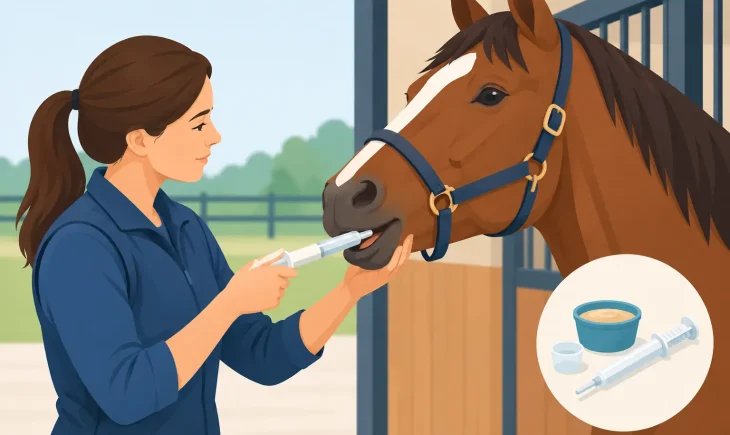
A horse can spot a hidden tablet in a feed bucket with remarkable accuracy. Knowing how to administer oral horse medication without turning every dose into a fight protects the treatment plan, reduces waste, and keeps both horse and handler safer. The right method depends on the product, the horse’s behavior, and whether the full dose must be confirmed immediately.
Oral medications can be highly effective, but only when the horse receives the intended amount at the intended interval. A partially eaten medicated meal, a paste dropped onto the stable floor, or a crushed tablet that should have remained intact can change the result. Start with the product label and the directions supplied by your veterinarian, then choose the administration method that gives you the best control.
Check the Medication Before You Dose
Before opening a syringe, packet, or tub, confirm the horse’s identity, the product name, concentration, dose, route, and dosing schedule. This matters in busy barns where several horses may receive supplements, dewormers, anti-inflammatory medications, respiratory products, or recovery support on the same day.
Read the label every time, especially when switching between package sizes or concentrations. A paste syringe may be marked by body weight, while a liquid may require measurement in milliliters. Do not assume two products with a similar name, flavor, or active ingredient have the same strength.
Check the expiration date and storage instructions. Heat, moisture, freezing, and direct sunlight can affect some formulations. If a liquid has separated, changed color, developed an unusual odor, or contains particles when it should be clear, stop and confirm with the dispensing professional before use.
The horse should be able to swallow normally and should not be heavily sedated, choking, or showing signs of colic. If a horse coughs repeatedly while eating, has feed or saliva coming from the nostrils, or struggles to swallow, do not attempt to force an oral dose. Those signs need veterinary attention.
Choose the Best Oral Medication Method
The best approach is the one that ensures the horse receives the full dose with the least stress. For an easy horse taking a palatable powder or granule, a small feed carrier may work well. For a time-sensitive paste or an unpleasant-tasting medication, direct oral dosing is usually more reliable.
Paste and Gel Syringes
Paste syringes are common for dewormers, electrolytes, supplements, and certain medications. Set the syringe ring or dial to the prescribed dose before approaching the horse. If the product is weight-based, use a current and realistic body-weight estimate rather than guessing. Underestimating weight can lead to an inadequate dose, while overdosing can create avoidable risk.
Fit the horse with a halter and stand at the side of the head, not directly in front. Hold the lead rope securely, but do not wrap it around your hand. With one hand, gently raise the horse’s head just enough to keep it from immediately dropping and ejecting the paste.
Insert the syringe through the gap between the incisors and cheek teeth, known as the interdental space. Aim the tip toward the back of the tongue, along the side of the mouth. Do not push the syringe straight down the throat or force it against the teeth. Deliver the paste steadily, withdraw the syringe, and keep the head elevated briefly while the horse swallows.
Watch for a swallow and check that the horse has not deposited the dose in its cheek or spat it out. If you are unsure how much was lost, do not automatically repeat the full dose. Contact your veterinarian or the product supplier for guidance, because redosing can be unsafe with some medications.
Tablets and Capsules
Tablets are often more difficult because horses can separate them from feed. Some tablets may be placed directly into the mouth using a pill gun designed for horses, while others can be hidden in a small amount of a suitable treat or feed. Direct administration gives the best confirmation, but it requires a calm horse and confident handling.
Never crush, split, dissolve, or open a tablet or capsule unless the label or a veterinarian says it is acceptable. Coated, extended-release, delayed-release, and enteric-coated products may not work correctly once altered. Crushing can also expose the handler to drug dust, which is a concern with certain hormones, corticosteroids, chemotherapy-related drugs, and other potent products.
When using a pill gun, load the tablet according to the device instructions. Place it through the interdental space, position it as far back on the tongue as safely possible, release the tablet, and remove the device promptly. Keep the horse’s head slightly raised until it swallows. A small oral syringe of water may help with swallowing when approved for the product and horse.
Powders, Granules, and Liquids in Feed
Feed administration is convenient, especially for long-term supplements or products designed to be mixed with ration. The risk is simple: if the horse does not finish the feed, you do not know how much medication it received.
Use a small, highly palatable carrier first, such as a modest portion of soaked pellets, mash, or another veterinarian-approved feed the horse reliably eats. Mix the full measured dose thoroughly into that small portion and wait until it is completely consumed before offering the normal meal. Do not hide medication in a full bucket of grain or hay if accurate dosing matters.
For liquids, use a marked oral syringe or measuring device rather than estimating by capfuls. Mix only if the label allows it. Some liquids are best administered directly by syringe into the side of the mouth, particularly when the taste is strong or the horse has a history of leaving medicated feed.
Make the Process Safer for Horse and Handler
A quiet setup saves time. Dose the horse in a familiar stall, cross-tie area, or safe grooming space with adequate light and minimal activity. Have the measured medication ready before bringing the horse into position. Searching for a syringe while the horse becomes impatient is an easy way to lose control of the session.
Use clean equipment for every dose. Rinse and dry reusable oral syringes between products, and never use the same dosing tool for multiple horses unless it can be properly cleaned. This helps prevent cross-contamination and protects the accuracy of future doses.
If a horse becomes defensive, raises its head out of reach, strikes, rears, or repeatedly refuses handling, do not escalate into a physical contest. The safer answer may be training, a different formulation, a more palatable carrier, or veterinarian-directed sedation in specific circumstances. Forcing the issue can create a long-term aversion to oral treatment and increase injury risk.
Avoid Common Dosing Mistakes
The most frequent problem is assuming a dose was swallowed when it was not. Stay with the horse for a moment after administration. Check the lips, cheeks, feed tub, bedding, and front of the stall for dropped paste, tablets, or wet medication.
Another mistake is doubling a dose after a missed or uncertain administration. Some products have a wider safety margin than others, but that decision should be based on the specific active ingredient, the horse’s size, health status, and timing. Call the prescribing veterinarian if the dose was missed, vomited up by an unusual event, spilled, or only partly consumed.
Keep a written medication record in the barn. Include the horse’s name, product, lot number when relevant, dose, route, date, time, person administering it, and any observed reaction. In a training or breeding operation, this record also helps manage withdrawal times and competition rules. Requirements vary by discipline, location, and medication, so verify them before an event rather than relying on old barn notes.
Pay attention after the first dose and after any dose change. Reduced appetite, diarrhea, hives, facial swelling, agitation, depression, unusual sweating, or changes in drinking behavior deserve prompt attention. Severe breathing difficulty, collapse, marked swelling, or signs of choking require urgent veterinary help.
Build a Reliable Dosing Routine
For horses on ongoing oral therapy, consistency is part of treatment. Give the medication at approximately the same time each day, use the same method when practical, and avoid changing feed carriers without a reason. A horse that accepts a small medicated mash at evening feeding may refuse it after a sudden switch in flavor, texture, or routine.
It is worth keeping suitable oral dosing supplies on hand: appropriately sized syringes, clean measuring tools, gloves for products that require them, and a reliable way to record doses. When you source horse health products, choose clearly labeled formulations and order before the current supply is close to empty. Equine MedCare offers a broad selection of oral horse products for owners and managers who need practical access to treatment and performance-support options.
A calm handler, an accurate dose, and a method the horse accepts are more valuable than any trick for hiding medication. When in doubt, slow down, confirm the label, and ask for veterinary direction before the next dose.