A horse can look completely normal in the stall and still experience bleeding in the lungs during hard work. That is why EIPH treatment in horses cannot be based on whether blood appears at the nostrils after a race or intense gallop. Visible blood is only one possible sign, and it is not the most common one.
For racing and high-performance horses, exercise-induced pulmonary hemorrhage can mean slower recovery, reduced willingness to extend, coughing after work, or a drop in performance that is easy to mistake for a fitness issue. The practical goal is not to promise a complete cure. It is to confirm the problem, reduce the severity and frequency of bleeding, identify contributing airway disease, and create a race-day plan that complies with the rules where the horse competes.
What EIPH Actually Means for a Performance Horse
EIPH occurs when intense exercise places extreme pressure on the small blood vessels in the lungs. Some of those vessels can leak blood into the airways. It is especially common in Thoroughbred and Standardbred racing, but it can also affect barrel horses, polo ponies, eventers, jumpers, and other horses performing at speed or near maximum effort.
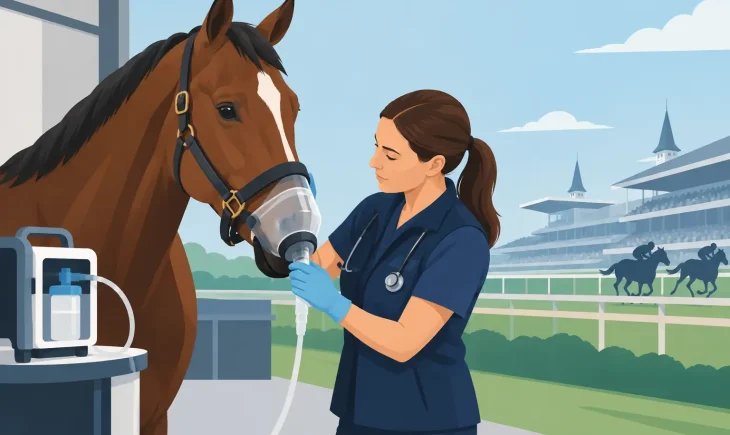
A one-time poor finish does not prove EIPH. Neither does a small amount of blood at the nose. Epistaxis – visible nostril bleeding – may occur with EIPH, but many affected horses show no outward bleeding at all. A veterinarian generally confirms the condition with upper airway endoscopy after exercise. In selected cases, a bronchoalveolar lavage may help evaluate red blood cells and inflammation deeper in the lower airway.
That distinction matters. Treating every underperforming horse as a bleeder can delay the real diagnosis, whether it is inflammatory airway disease, infection, poor conditioning, cardiac disease, upper airway obstruction, gastric ulcers, pain, or an equipment issue.
EIPH Treatment Horses Need Starts With a Clear Plan
Once EIPH is diagnosed, the plan should match the individual horse, the severity of bleeding, the competition schedule, and the governing authority’s medication rules. There is no single protocol that fits every barn.
Furosemide and race-day medication rules
Furosemide is the best-known medication used to reduce EIPH severity in racehorses. When administered under veterinary direction before strenuous exercise, it can reduce pulmonary vascular pressure and has been shown to decrease the amount of blood found in the airways in many horses.
It does not make a horse immune to EIPH, and it is not a substitute for finding other respiratory problems. It is also a diuretic, so hydration status, electrolyte balance, travel conditions, heat, and recovery all deserve attention. A horse that is already dehydrated, shipping long distances, or working in oppressive heat needs careful management.
Most importantly, furosemide policies vary widely. Some racing jurisdictions permit tightly controlled race-day administration. Others restrict it, require specific documentation, or prohibit it. Sport-horse organizations may have entirely different rules. Trainers and owners should verify the current regulations with the relevant racing commission or competition body before any medication is administered. Do not rely on an old barn protocol or advice from another circuit.
Treat airway inflammation when it is present
EIPH often exists alongside lower-airway inflammation, excess mucus, recurrent airway obstruction, or infection. These conditions do not automatically cause EIPH, but inflamed or obstructed airways can add stress to a horse already working hard to move air.
Treatment may include environmental changes and, when a veterinarian identifies a specific condition, targeted respiratory medication. Bronchodilators, corticosteroids, antimicrobials, or other therapies may be appropriate in certain cases, but they are not universal EIPH treatments. Their use should follow an examination, airway evaluation, and the appropriate withdrawal guidance.
The direct approach saves time and money: address the disease that is actually there. Using multiple products without diagnosis can create medication-rule problems while doing little to improve the horse’s respiratory performance.
Stable Management That Supports the Treatment Program
Medication alone cannot overcome a dusty stall, poor forage quality, chronic airway irritation, or an overloaded training schedule. The stable environment is part of EIPH management because clean air supports a healthier lower airway.
Start with dust control. Use low-dust bedding, avoid sweeping and blowing aisles while horses are inside, and choose well-managed hay or a suitable low-dust forage option. Soaking or steaming hay may help some horses, although the best method depends on the forage and the horse’s nutritional needs. Good ventilation is essential, but stalls should not become damp, stagnant spaces.
Turnout can also be useful when it reduces time spent around indoor dust and ammonia. Watch the individual horse, though. Outdoor pollen, mold, smoke, freezing air, or dry arena footing may worsen respiratory signs in certain locations or seasons.
Travel deserves the same attention as home-stable care. Long shipping can increase exposure to dust, reduce water intake, and leave a horse with less recovery time before training or competition. Build in hydration, rest, and enough time to assess the horse after arrival. For a horse with a history of EIPH, the day before a major start is not the time to make a major feed, supplement, medication, or training change.
Training and Recovery Decisions Matter
A horse with repeated EIPH episodes should not simply be pushed harder because it is not finishing strongly. Review the work pattern with the veterinarian, trainer, and rider or driver. Some horses benefit from a short reduction in high-intensity work while airway disease is investigated and controlled. Others may need an adjusted conditioning plan, especially after time off, illness, or a change in climate.
Keep useful records. Note the date of episodes, endoscopic grade when available, weather, footing, race distance, transport, feed changes, respiratory noise, recovery time, and medications given. Patterns often appear when the information is recorded rather than discussed from memory in the shedrow.
Recovery care should stay practical. Provide free access to clean water unless the attending veterinarian directs otherwise, monitor appetite and manure output, and watch for unusual fatigue or breathing effort after exertion. Electrolyte plans should fit the horse’s sweat losses, diet, climate, and workload rather than follow a one-size-fits-all label routine.
Be Careful With Supplements and Unproven Claims
Many products are marketed for lung support, circulation, capillary strength, or recovery. Some owners include them as part of a broader management program. The trade-off is that evidence for preventing or treating EIPH varies considerably, and a supplement should never be presented as equivalent to a properly managed veterinary treatment plan.
Before adding any performance-support product, check the complete ingredient list and confirm its status under your competition rules. Natural does not always mean permitted, and a mislabeled or contaminated product can create a costly positive test. Choose products with clear labeling, reliable batch control, and realistic claims.
If a product promises to stop bleeding in every horse, treat that claim cautiously. EIPH is a complex exercise-related condition, not a problem solved by one bottle.
When to Call the Veterinarian Quickly
Visible blood from either nostril after work, repeated coughing, labored breathing, fever, nasal discharge, marked exercise intolerance, or a sudden decline in recovery warrants prompt veterinary assessment. Blood at the nostrils can be related to EIPH, but it can also come from the upper airway or another source that requires a different response.
For a horse that has already been diagnosed with EIPH, schedule follow-up when performance changes or the previous plan is no longer working. Repeated episodes deserve reassessment rather than automatic refills and repeated assumptions.
The strongest EIPH program is built before the next hard effort: a confirmed diagnosis, a legal medication plan, clean-air management, and enough honest recordkeeping to see what your horse is telling you. That preparation gives a performance horse the best chance to train, travel, and compete with fewer respiratory setbacks.