
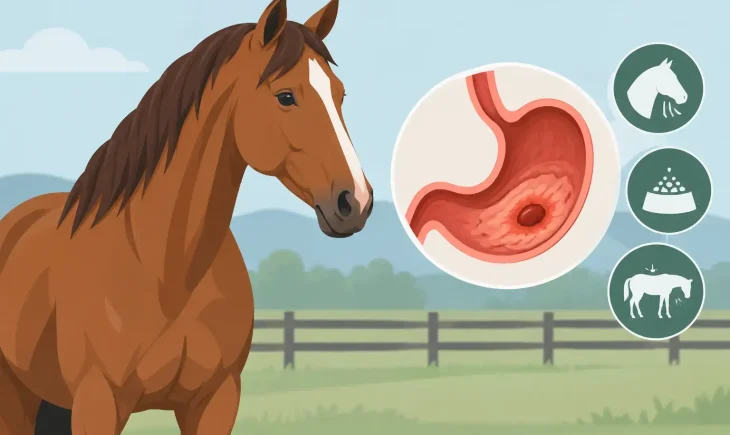
A horse can look fit, eat most of his feed, and still be uncomfortable enough to lose his edge in training. That is why learning how to recognize horse ulcers matters for owners, trainers, and stable managers. Ulcers do not always announce themselves with dramatic colic or obvious pain. More often, the first clues are a change in attitude, feeding behavior, recovery, or willingness to work.
Gastric ulceration is common in performance horses because the equine stomach continuously produces acid. Intense exercise, travel, stall confinement, inconsistent forage access, high-grain diets, illness, and frequent use of certain medications can all increase risk. The practical goal is not to diagnose from one bad ride. It is to spot a pattern early, protect the horse’s condition, and arrange a proper veterinary assessment before small signs become a performance or welfare problem.
How to recognize horse ulcers in daily work
Ulcers can affect different areas of the stomach, and signs vary by horse. Some horses become quiet and withdrawn. Others become reactive, girthy, resistant, or unusually difficult under saddle. A horse with gastric discomfort may still compete, jump, race, or train, but he may do so with less consistency and a shorter fuse.
Watch the horse at feeding time as closely as you watch him in the arena. A horse that walks up to feed eagerly, takes a few mouthfuls, then steps away may be signaling discomfort. So can slow eating, leaving concentrates while continuing to eat hay, or showing a new preference for soaked or soft feeds. Reduced appetite can be subtle, particularly in a horse that has always been a good doer.
Behavior around grooming and tack is another useful checkpoint. Pinning ears when the girth is tightened, biting at the air during grooming, kicking at the belly, or objecting to brushing behind the elbow may reflect abdominal pain. These signs are not specific to ulcers. A poor saddle fit, back soreness, skin disease, reproductive pain, or training conflict can look similar. Still, a new cluster of reactions deserves attention.
The most useful warning signs usually include changes in:
- appetite, feed preference, or eating speed
- attitude during grooming, tacking, or handling
- coat quality, body condition, and topline maintenance
- manure consistency or recurrent mild digestive upset
- willingness to go forward, bend, collect, or accept the leg
- recovery, focus, and consistency in training or competition
One sign alone rarely proves anything. A horse that is grumpy for one girthing may simply be having a bad day. A horse that is increasingly girthy, leaves grain, loses condition, and starts resisting work is a different picture.
Performance signs owners often miss
For active sport and race horses, ulcers often first show up as lost efficiency rather than obvious illness. The horse may take longer to warm up, feel tight through the body, or lose his usual desire to work. He may shorten his stride, hollow through transitions, rush fences, resist collection, swap leads unexpectedly, or become unusually sensitive to the rider’s leg.
Poor performance does not automatically mean the horse has ulcers. Lameness, airway disease, dental issues, muscle pain, overtraining, dehydration, tack problems, and inadequate calories all need consideration. But when performance decline arrives alongside feeding or behavior changes, gastric discomfort should move higher on the list.
Pay attention after travel, shows, layups, illness, or a demanding training block. These are common periods when normal routines change. A horse may have less turnout, longer gaps without forage, unfamiliar water, higher stress, or more concentrate intake. Recording appetite, manure, body weight, and attitude through these periods gives the stable a much clearer baseline than relying on memory.
Physical clues can be quiet
Some horses with ulcers lose weight or have a dull coat, but many do not. A heavily fed performance horse may maintain body condition while still experiencing significant stomach discomfort. Likewise, a bright coat does not rule ulcers out.
Possible physical clues include intermittent mild colic, teeth grinding, stretching as if to urinate, lying down more than usual, or a tucked-up appearance. In foals, warning signs can be more urgent and may include nursing changes, diarrhea, teeth grinding, salivation, rolling, weakness, or abdominal discomfort. A foal with these signs needs veterinary attention promptly rather than a wait-and-see approach.
Manure changes are worth tracking, but they need context. Loose manure can result from diet changes, parasites, stress, antibiotics, infectious disease, or hindgut problems. Gastric ulcers are not a catch-all explanation for every pile of soft manure in the stall.
Why risk factors matter
Recognizing risk does not replace recognizing symptoms, but it helps you act sooner. Horses are designed to graze frequently. Long periods with an empty stomach leave the upper, unprotected part of the stomach more exposed to acid. High-intensity exercise can also increase acid exposure, especially when a horse works with little forage in the stomach.
Risk rises when a horse has limited turnout, irregular hay access, a grain-heavy ration, frequent hauling, stall stress, or a demanding competition schedule. Some anti-inflammatory medications can also irritate the digestive tract when used improperly or in sensitive horses. Do not stop, start, or combine medications without veterinary direction, particularly when the horse is being treated for pain, inflammation, or another active condition.
Not every horse in a busy barn develops ulcers, and not every ulcer-prone horse has a dramatic schedule. Individual temperament, feeding management, previous disease, and workload all matter. That is why comparing a horse to his own normal behavior is more valuable than comparing him to another horse in the aisle.
Confirming ulcers: do not guess from symptoms
Gastroscopy is the standard way to confirm gastric ulcers and assess their location and severity. During this veterinary procedure, the stomach is examined with an endoscope after appropriate preparation. It provides information that behavior alone cannot: whether ulcers are present, where they are, and how serious they appear.
This distinction matters because treatment is not one-size-fits-all. Ulcers in the squamous portion of the stomach and lesions in the glandular region may require different management and veterinary treatment plans. Symptoms attributed to “ulcers” may also turn out to be pain, dental trouble, parasites, colonic disease, or another issue entirely.
Avoid treating every difficult horse as an ulcer case based only on a product recommendation or a few symptoms online. An inappropriate approach can delay the real diagnosis, spend money without results, and allow the horse to continue working in discomfort. For a valuable performance horse, that is a costly gamble.
What to do while you wait for the veterinarian
If ulcers are suspected, start with the facts. Write down when signs began, whether they follow feeding or exercise, recent travel, medication use, diet changes, turnout changes, and the horse’s current workload. Take note of body condition, water intake, manure, appetite, and any episodes of colic or girthiness. This history helps the veterinarian distinguish a one-off behavior issue from a sustained digestive concern.
Maintain steady access to appropriate forage unless your veterinarian advises otherwise, and avoid sudden feed changes. Review the horse’s schedule: long fasting periods, hard work before breakfast, and repeated stressful handling are practical management points to discuss. Do not mask recurring discomfort by simply increasing training pressure or changing bits, girths, and supplements one after another.
Seek urgent veterinary help if the horse has persistent or severe colic signs, repeated rolling, marked depression, refusal to eat or drink, fever, bloody manure, weakness, or signs of dehydration. Those signs can indicate conditions more serious than uncomplicated gastric ulcers.
A horse does not need to be visibly thin or dramatic to deserve attention. When a normally willing athlete starts eating differently, acting guarded around the belly, or losing consistency under saddle, take the change seriously. Fast recognition, a veterinary diagnosis, and disciplined feeding and workload management give the horse the best chance to return to comfortable, reliable work.